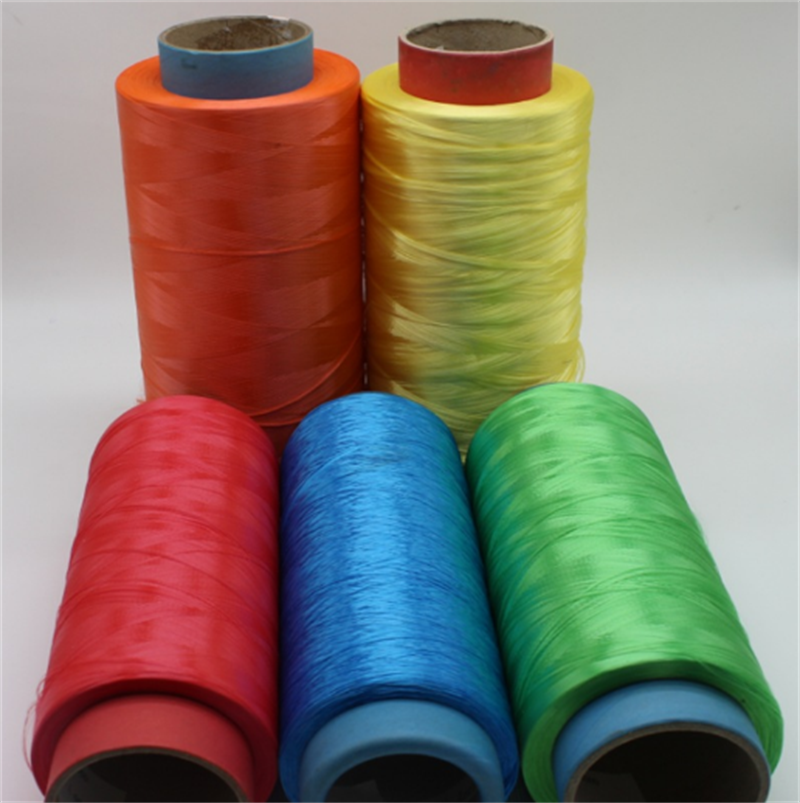
What is low melt sheath-core yarn?
What is low-melt sheath-core yarn?
Low Melting Sheath-Core Yarn is a specialized type of composite yarn designed for thermal bonding applications. It consists of two distinct components: a core and a sheath, where at least one layer (either the core or sheath) is made of a low-melting-point polymer. This structure allows the yarn to melt or soften at relatively low temperatures, enabling it to bond with other fibers or materials when heated. Below is a detailed breakdown of its definition, characteristics, applications, and differences from conventional sheath-core yarns:
Key Features
- Material Composition:
Sheath (Outer Layer): Typically made of low-melting-point polyester (LMPET), low-melting nylon (LMPA), or other thermoplastic polymers. This layer melts at lower temperatures (e.g., 110–180°C for LMPET).
Core (Inner Layer): Often uses standard polyester, nylon, or other high-strength fibers to provide structural integrity, elasticity, or durability.
- Thermal Bonding Capability:
When heated, the low-melting sheath layer softens or melts, acting as an adhesive to bond with adjacent fibers, fabrics, or substrates. This eliminates the need for separate adhesives in manufacturing processes.
- Performance Synergy:
Combines the strength and stability of the core material with the thermal responsiveness of the sheath, offering enhanced functionality like heat resistance, elasticity, or moisture management.
Advantages Over Conventional Sheath-Core Yarns
- Functional Focus:
While conventional sheath-core yarns prioritize material compatibility and performance balance (e.g., combining cotton’s softness with polyester’s strength), low-melting variants are engineered for thermal activation. Their primary role is to enable bonding or fixation during heating.
- Process Efficiency:
Low-melting sheath-core yarns streamline production by integrating adhesion into the yarn itself, reducing steps like glue application in laminating or composite manufacturing.
Applications
- Nonwovens and Bonded Fabrics:
Used in disposable hygiene products (diapers, sanitary pads), medical textiles, and geotextiles, where thermal bonding replaces needles or adhesives.
- Footwear and Apparel:
For shoe upper materials, heat-sealed seams, or stretch fabrics requiring dimensional stability after molding.
- Composite Reinforcements:
Acts as a thermoplastic matrix in composites, binding fibers like glass or carbon during hot-press molding.
- Filter Media:
Enhances structural integrity in high-temperature filtration systems (e.g., industrial exhaust filters).
- Sustainable Textiles:
Recyclable formulations allow post-use reprocessing, aligning with circular economy goals.
Manufacturing Process
- Conjugate Spinning: Two polymers with different melting points are extruded through a spinneret to form a sheath-core structure.
- Post-Treatment: The yarn may undergo drawing, texturing, or twisting to optimize performance for specific applications.
Example Use Case
- Invisible Window Screens: A low-melting polyester sheath-core yarn (e.g., LMPET/PET) is woven into screens. When heated, the sheath melts slightly, sealing gaps between fibers to create a durable, mosquito-proof barrier without compromising visibility.
What is difference between Nylon 6 and Nylon 66?
What is imitation nylon yarn?