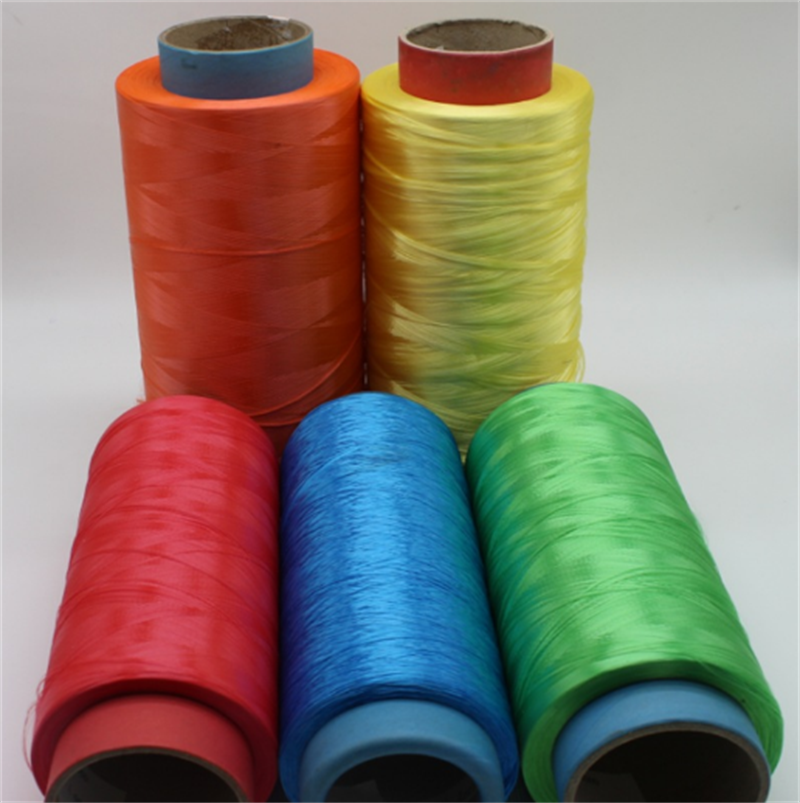
Polylactic acid yarn PLA
Polylactic acid environmentally friendly degradable yarn
The full name of polylactic acid is Poly Lactic Acid (PLA), also known as polylactide (Polylactide), which is an aliphatic polyester. Polylactic acid is a biodegradable polymer material. It is made from biomass materials such as sugar, starch, and cellulose, fermented into lactic acid, and then polymerized into polylactic acid polymer materials.
Polylactic acid is a type of biopolymer material made from cassava, sorghum, corn, straw and other crops through fermentation, purification, polymerization and other production processes. Its production energy consumption is lower than that of synthetic materials produced from petroleum products Polymer energy consumption is 30%-50% lower. Under normal temperature and humidity, polylactic acid and its products are stable in physical properties, non-toxic, non-irritating, with high strength, good mechanical properties, high impact resistance, high softness and thermal stability. Discoloration, good permeability to oxygen and water vapor, good transparency, antibacterial and mildew resistance, its waste can be degraded into carbon dioxide and water by microorganisms in soil or seawater, and then photosynthesized by plants, unlimited Reciprocating into the great cycle of nature.
Polylactic acid (PLA) is one of the main alternative materials for human beings to solve white pollution, and it is also the main carbon sequestration and carbon reduction material in the material industry to achieve carbon neutrality and carbon peaking. Its absolute safety, excellent skin affinity and other characteristics can not only make a fundamental contribution to human daily life, but also solve the problem of ubiquitous microplastics poisoning the human body.
It is understood that the current global PLA has a market capacity of more than 50 million tons per year, and can replace 70% of traditional petroleum-based plastics and chemical fibers. It is suitable for downstream processing methods of various plastics and chemical fibers, and has a wide range of uses. The world's annual output of petroleum-based plastics and chemical fibers is about 400 million tons, and China's annual consumption is about 160 million tons. The alternative market space is huge, and the market demand far exceeds the current production capacity. In the future, the domestic biodegradable plastic market (plastic replacement market, emission reduction market, functional market, etc.) will usher in rapid growth and will form a trillion-level market scale. With the tide of "banning plastics" and the clarification of "double carbon" goals, the field of polymer materials has ushered in the "PLA era".
Polylactic acid fiber has excellent properties such as human affinity, absolute safety, natural antibacterial properties, breathable and moisture-conductive properties, natural anti-mite properties, flame retardancy, good gloss, UV resistance, and complete biodegradability. It will surely become the main raw material of global fiber products.
Polylactic acid has the following advantages:
Raw materials are easily available and renewable, suitable for large-scale intensive production.
Barrier performance, breathability, transparency gloss and hardness, tensile and flexural modulus are all higher than traditional plastic resins.
Better biocompatibility. Its monomer raw material L-lactic acid is an endogenous active substance of the human body. Polylactic acid products are non-toxic to the human body, not repellent and can be absorbed by the human body. They can be made into medical tissue skeleton materials and pharmaceutical carriers and can be safely used in the human body. US FDA certification.
Completely degradable, it can be degraded into carbon dioxide and water after being buried in the soil for 6-12 months.
Price: Polylactic acid slices are mainly imported from the United States, the Netherlands and other countries. The price is as high as 3000$/ton, plus processing costs, the price of fiber products is much more expensive than cotton. Based on the world's most advanced lactic acid fermentation technology and polylactic acid synthesis technology owned by a Chinese company in the past 20 years, the manufacturing cost of polylactic acid slices has been greatly reduced, and the price of polylactic acid fibers made from it is expected to be lower than that of cotton. This means that this application of green environmental protection materials in the textile industry may use in great opportunities, and will also help the textile industry to better achieve sustainable development.
What is your opinionfor this yarn?
Monofilament yarn, what is? the use end?
UHMW-PEF:Ultra High Molecular Weight Polyethylene Fiber Do you know about this special functional yarn?