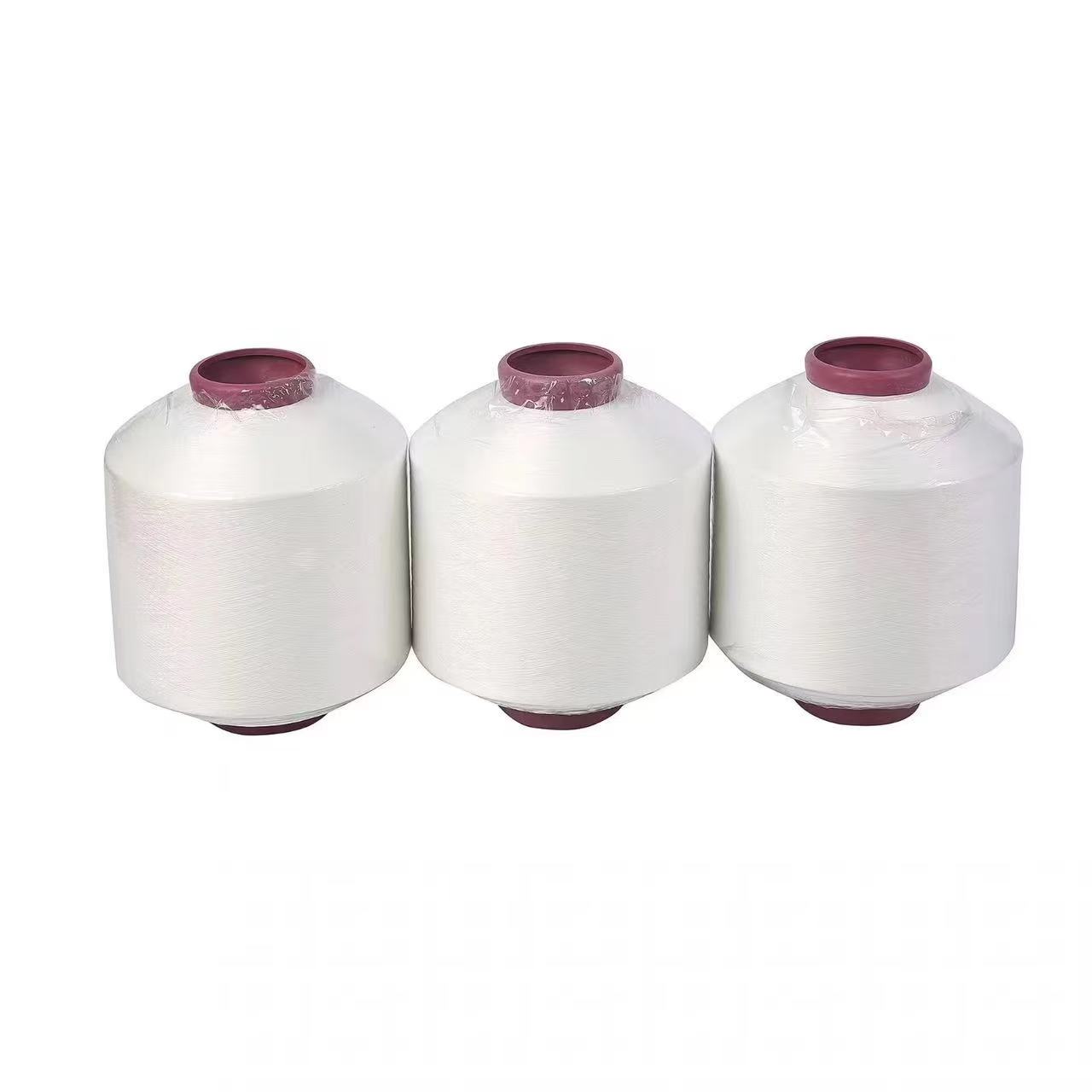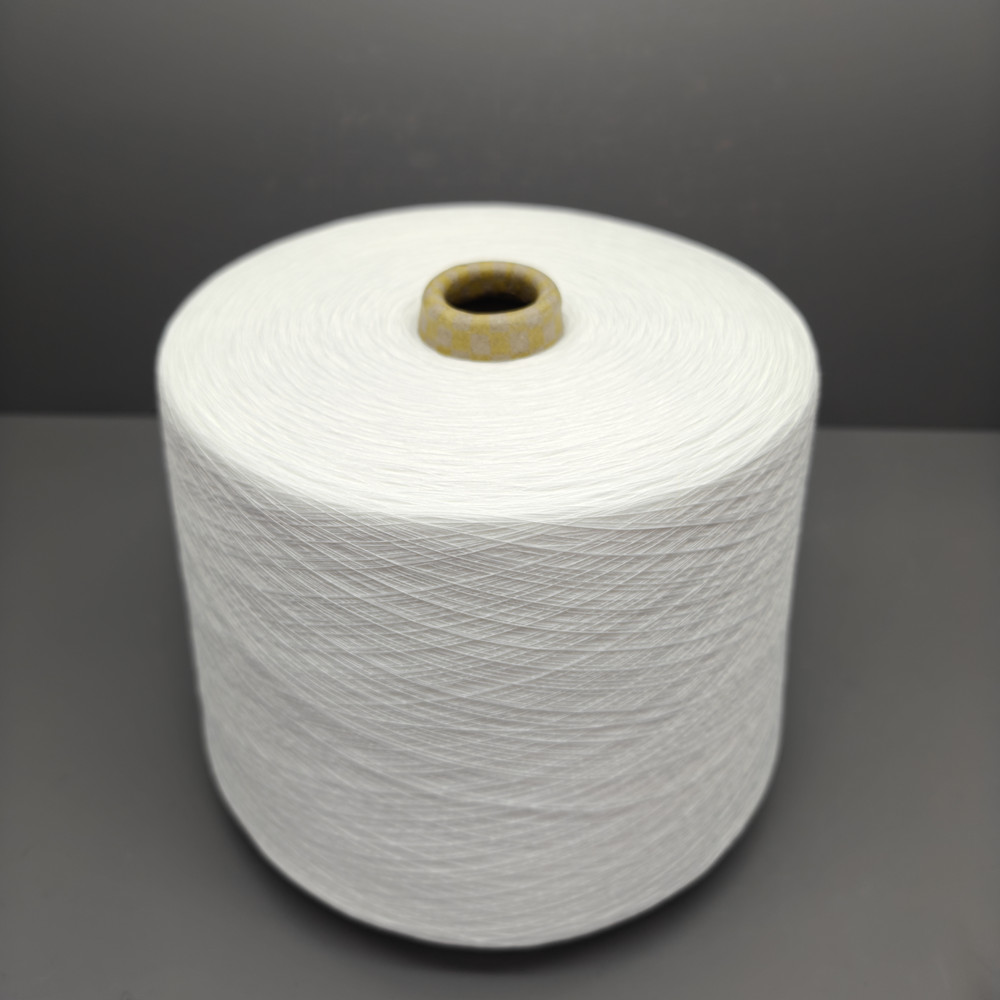
100% bamboo fiber yarn
Recently, many customers have asked about 100% bamboo fiber yarn. Here is a brief introduction to the types of this yarn and the differences between the two types of yarn.
Classification:
Bamboo fiber is a cellulose fiber made from bamboo. According to the selection of materials and processing technology, it can be divided into bamboo fiber and bamboo pulp fiber.
Production principle:
Bamboo fiber is made by removing impurities such as lignin, polypentose, bamboo powder and pectin from bamboo materials through physical and mechanical methods, or soaking in natural drugs, and then through whole material, slice making, soaking, cooking, degumming, silk division, combing, screening and other processes.
Bamboo pulp fiber is a kind of bamboo slices made into pulp, then the pulp is made into pulp, and then wet spinning is made into fiber. Its production and processing process is basically similar to viscose.
Advantages:
The moisture absorption capacity of bamboo fiber and bamboo pulp fiber is greater than cotton but less than viscose. This is because there are more voids in the fiber than cotton, the structure is relatively loose, and water molecules can easily enter. After testing, the moisture regain of bamboo fiber is 13%, and the moisture regain of bamboo pulp fiber is 12%. The two fibers have fast moisture absorption and release rates. They absorb water molecules when the indoor relative humidity is high, and release water molecules when it is dry, which can play a role in regulating humidity. Therefore, bamboo products have a cool feeling and are especially suitable for underwear, sportswear, summer clothing fabrics, etc.
Because bamboo fiber and bamboo pulp fiber have excellent moisture absorption and release properties, they have good conductivity. Static electricity will not accumulate during spinning, so there is less entanglement with machine parts, and the spinning process is smooth. Blending with synthetic fibers with poor hygroscopicity can improve the spinnability of synthetic fibers and is conducive to yarn formation.
Comparison:
Through the comparison of bamboo fiber and bamboo pulp fiber, it is believed that the performance of bamboo pulp fiber is more superior, which is manifested in a small coefficient of variation of strength and elongation, a large elongation, and good fiber toughness, wear resistance, and spinnability.
UV blocking ability: There are a large number of conjugated systems (benzene rings, double bonds, etc.) in bamboo fiber, which can effectively absorb ultraviolet rays; after deep chemical processing, part of the original conjugated system of bamboo pulp fiber is destroyed, and the ability to block ultraviolet rays is reduced by 45%.
Antibacterial and deodorizing performance: Bamboo fiber has natural antibacterial properties and can inhibit bacterial growth; although bamboo pulp fiber also has certain antibacterial properties, the effect is not as obvious as bamboo fiber.
There are obvious differences between bamboo fiber and bamboo pulp fiber in many aspects of performance. Consumers should decide based on specific needs and usage scenarios when choosing products.
Both bamboo fiber yarn and bamboo pulp fiber yarn are light and soft fiber products used in hand weaving, embroidery and other aspects, but there are some differences in how to distinguish them.
1. Bamboo fiber yarn: soft texture, delicate touch, lighter color, common colors are white, gray, beige, etc.
2. Bamboo pulp fiber yarn: soft texture, delicate touch, brighter color, common colors are red, blue, green, etc.
2. Several ways to distinguish bamboo fiber yarn and bamboo pulp fiber yarn
1. Compare colors: Check the color of the yarn with the naked eye, and you can distinguish the two yarns from the brighter or lighter color.
2. Pull a section of yarn for comparison: Pull a section of bamboo fiber yarn and bamboo pulp fiber yarn respectively. The soft filaments are bamboo fiber yarns, and the rough ones are bamboo pulp fiber yarns.
3. Observe the gloss: When exposed to sunlight or light, the glossiness of bamboo pulp fiber yarn is relatively high, while that of bamboo fiber yarn is relatively low.
3. Scope of application
Both bamboo fiber yarn and bamboo pulp fiber yarn can be used for hand weaving, embroidery and other aspects, but because of their different characteristics and textures, the applicable scenarios are also different.
1. Bamboo fiber yarn: suitable for weaving fine fabrics, clothing, etc., because of its soft and delicate characteristics, it is more convenient to use.
2. Bamboo pulp fiber yarn: suitable for weaving tough and silky fabrics, clothing, etc., because of its high gloss, the woven products are more textured.
In summary, although bamboo fiber yarn and bamboo pulp fiber yarn are very similar, their differences can still be distinguished from the aspects of color, feel, gloss and so on. When choosing yarn, you must choose the right material according to your needs.
Application and Development Trends of PBT Fiber
ATY YARN
Related Article

840/140
1680/280
2520/420
for your strongest fabric.
Polyester HT 400D
400D 600D 1200D
Webbing, suitcase straps use